Love this?Pin it for later!
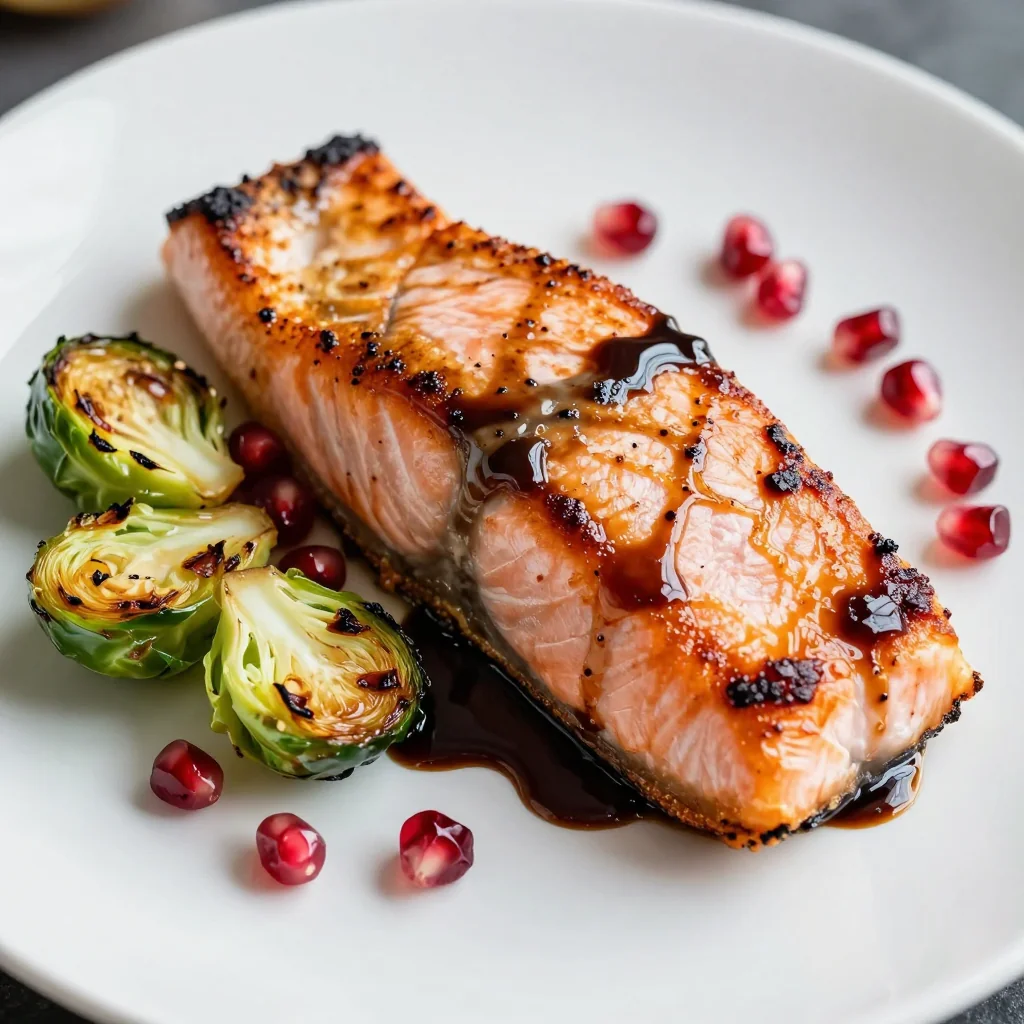
Kick off January with a dinner that feels like a celebration yet keeps your wellness goals firmly on track. This sheet-pan wonder—flaky salmon lacquered with a glossy balsamic reduction, roasted alongside caramelized Brussels sprouts—has become my unofficial New-Year anthem. I first served it on a frigid Tuesday when the holidays had left me craving something vibrant but virtuous. One bite in, my husband declared it “restaurant worthy,” and my kids actually asked for seconds of Brussels sprouts (a minor miracle). Whether you’re hosting a small gathering or simply want a low-effort, high-reward weeknight meal, this recipe delivers flavor that hugs you from the inside out while still honoring every “eat-more-omega-3s” resolution.
Why This Recipe Works
- One-pan magic:Salmon and vegetables roast together, cutting dishes to almost zero.
- 10-minute glaze:A speedy balsamic reduction thickens while the oven preheats.
- Meal-prep friendly:Components hold beautifully for grab-and-go lunches.
- Balanced macros:34 g of lean protein plus fiber-rich cruciferous veg per serving.
- Adaptable heat:Add chili flakes for kick or swap maple for honey depending on pantry.
- Scalable:Easily doubles for a dinner party or halves for solo dining.
- Gluten-free & dairy-free:Inclusive for most dietary needs without sacrificing taste.
Ingredients You'll Need
Sourcing quality ingredients is half the battle for stellar seafood. Look for salmon fillets that are vibrant coral with no fishy smell—wild-caught Coho or King if your budget allows, responsibly farmed Atlantic if not. I prefer skin-on; it acts like a built-in insulator, yielding silkier flesh. For Brussels sprouts, choose tight, bright-green heads; loose or yellowing leaves signal age. The balsamic glaze hinges ongoodvinegar: a 4–6 % acidity, aged in wood barrels for depth. (Skip the $6 liter jug and treat yourself to a mid-range bottle—you’ll taste the difference.) Pure maple syrup balances tang with subtle caramel notes; if you only have honey, reduce it by 1 teaspoon since it’s sweeter. Finally, keep your Dijon smooth, not whole-grain, for a glossy finish.
Pantry smart-tip:Buy a 2-lb side of salmon, portion at home, and freeze what you won’t use within 24 hours. Wrap each piece tightly in parchment then foil, expel excess air, and freeze up to 3 months. Weeknight dinners = solved.
How to Make New Year New You Balsamic Glazed Salmon and Brussels
Position rack in center of oven; heat to 425 °F (220 °C). Trim stem ends of 1½ lb Brussels sprouts, remove any bruised leaves, and halve lengthwise. In a large bowl toss sprouts with 2 Tbsp olive oil, ½ tsp kosher salt, ¼ tsp black pepper, and ¼ tsp garlic powder until every leaf is slick. This high heat jump-starts Maillard browning, turning outer leaves into crispy chips while insides stay tender.
In a small saucepan combine ½ cup balsamic vinegar, 3 Tbsp pure maple syrup, 1 tsp Dijon mustard, and 1 small minced garlic clove. Bring to a gentle boil over medium heat, then reduce to a lively simmer. Swirl pan occasionally; in 6–8 min the mixture will coat a spoon at roughly ⅓ cup. Remove from heat; stir in 1 Tbsp cold butter for a mirror-like sheen. Set aside to thicken further—magic happens as it cools.
Pat four 6-oz salmon fillets very dry—excess moisture causes sticking. Brush flesh lightly with 1 tsp olive oil, then sprinkle with ½ tsp kosher salt, ¼ tsp pepper, and ¼ tsp smoked paprika for subtle warmth. Place skin-side down on a parchment-lined rimmed sheet pan, leaving a 2-inch buffer around each portion for hot-air circulation.
Spread Brussels in a single layer on the other half of the sheet pan. Slide into oven for 10 min. This head-start ensures the dense sprouts finish at the same time as the quicker-cooking salmon.
After 10 min, push Brussels to the perimeter, creating a small well in the center. Nestle salmon portions onto the cleared space. Brush each fillet with a generous 1 tsp of the thickened balsamic glaze. Return pan to oven for 9–11 min more, depending on thickness, until salmon flakes but still blushes coral inside (internal 125 °F for medium).
Switch oven to Broil on high for 2 min to blister glaze and char sprout tips. Watch closely—ovens vary. Transfer salmon to plates, spoon over remaining glaze, and pile on the crispy Brussels. Shower with lemon zest and a confetti of pomegranate arils if you’re feeling festive. Dinner is done, dishes are one pan, and your resolutions remain gloriously intact.
Expert Tips
Salmon transitions from silky to chalky fast; pull at 125 °F for medium or 130 °F if guests prefer firmer flakes.
Moisture is the enemy of sear. Even 30 sec with paper towels prevents sticking and encourages glaze adhesion.
If your oven has hot spots, give the pan a 180 ° turn after adding salmon to promote even browning.
Splash 2 Tbsp water while the pan is hot; scrape browned bits for an extra drizzle of flavor over grains.
The balsamic reduction keeps 2 weeks refrigerated. Warm 10 sec in microwave to loosen before brushing.
A sprinkle of citrus zest or ruby pomegranate brightens both flavor and presentation without extra calories.
Variations to Try
- Asian twist:Swap maple for 2 Tbsp hoisin, add ½ tsp sesame oil, and finish with toasted sesame seeds and scallions.
- Keto/low-carb:Replace maple with powdered erythritol and serve over cauliflower rice.
- Vegetable medley:Sub in halved rainbow carrots or fingerling potatoes; just increase initial roast time to 15 min.
- Spicy maple:Whisk ¼ tsp cayenne into glaze for tongue-tingling sweetness.
- Cedar plank:Omit sheet-pan method; grill salmon on soaked cedar for smoky outdoorsy vibes.
Storage Tips
Refrigerate:Cool leftovers within 2 hr. Store salmon and Brussels in separate airtight containers up to 3 days. Reheat salmon gently at 275 °F for 8 min or flake cold over salads. Brussels re-crisp in a 400 °F air-fryer for 3 min.
Freeze:Freeze only salmon, not Brussels (they get sulfury). Wrap fillets in parchment, then foil, inside a zip-top bag; freeze up to 3 months. Thaw overnight in fridge, then reheat as above.
Meal-prep:Portion salmon into bento boxes with quinoa and a handful of arugula. Drizzle glaze just before serving to avoid soggy greens.
Frequently Asked Questions
Can I use frozen salmon?
My glaze is too thin—what happened?
Can I double the recipe?
What sides pair well?
Is this recipe safe during pregnancy?
Can I grill instead of roasting?
Ingredients
- 1½ lb Brussels sprouts, trimmed & halved
- 4 Tbsp olive oil, divided
- 1 tsp kosher salt, divided
- ½ tsp black pepper, divided
- ¼ tsp garlic powder
- ½ cup balsamic vinegar
- 3 Tbsp pure maple syrup
- 1 tsp smooth Dijon mustard
- 1 small garlic clove, minced
- 1 Tbsp unsalted butter
- 4 skin-on salmon fillets (6 oz each)
- ¼ tsp smoked paprika
- Optional: lemon zest & pomegranate seeds for garnish
Instructions
- Preheat oven:Set to 425 °F (220 °C). Line a rimmed sheet pan with parchment.
- Season Brussels:Toss sprouts with 2 Tbsp oil, ½ tsp salt, ¼ tsp pepper, and garlic powder; spread on one half of pan. Roast 10 min.
- Make glaze:Simmer balsamic vinegar, maple syrup, Dijon, and minced garlic 6–8 min until reduced to ⅓ cup. Off heat, whisk in butter.
- Prep salmon:Brush fillets with remaining oil; season flesh with remaining salt, pepper, and paprika.
- Combine & roast:Push sprouts to edges; place salmon skin-down in center. Brush each fillet with 1 tsp glaze. Roast 9–11 min, then broil 2 min.
- Serve:Drizzle remaining glaze, garnish as desired, and enjoy immediately.
Glaze can be made up to 2 weeks ahead; store covered in refrigerator. Reheat gently to loosen. For well-done salmon, cook to internal temperature of 140 °F.