Love this recipe?Save it to Pinterestbefore you forget!
The first time I made this dish, I was staring down a fridge drawer of forgotten roots—wrinkled carrots, a softball-sized rutabaga, and some sad parsnips that had seen better days. Rent was due in five days, my grocery budget was tighter than the lid on a pickle jar, and I needed dinner to stretch for four nights. I hacked everything into chunks, doused it all in the last of my olive oil, flung in the remainder of a jar of minced garlic, and—on a whim—zested the lonely lemon rolling around the produce drawer. Four hours later the apartment smelled like a farmhouse kitchen in Tuscany and I, perpetually cash-strapped grad student, finally understood what “frugal luxury” meant. Ten years, two kids, and one mortgage later, this is still the recipe I turn to when the world feels too expensive. It’s proof that humble ingredients, low heat, and patience can taste like a million bucks.
Why You'll Love This Slow-Roasted Garlic & Lemon Root Vegetables
- Cents-sational Price:Feeds six for well under five dollars using humble winter staples.
- Hands-Off Method:Ten minutes of prep, then the oven does all the heavy lifting while you binge Netflix.
- Deep Caramelized Flavor:Low-and-slow roasting coaxes out natural sugars; the garlic mellows into candy-like cloves.
- One-Pan Cleanup:Everything roasts together on a single sheet—no tower of dishes.
- Meal-Prep MVP:Tastes even better the next day; reheat for breakfast with eggs or mash into hummus.
- Vegan & Gluten-Free:Crowd-pleasing for every dietary tag without sacrificing comfort.
- Zero Food Waste:Perfect for using up slightly soft roots; peel, chop, and roast—no one will know.
- Customizable Canvas:Swap in whatever’s on sale; the technique stays the same.
Ingredient Breakdown
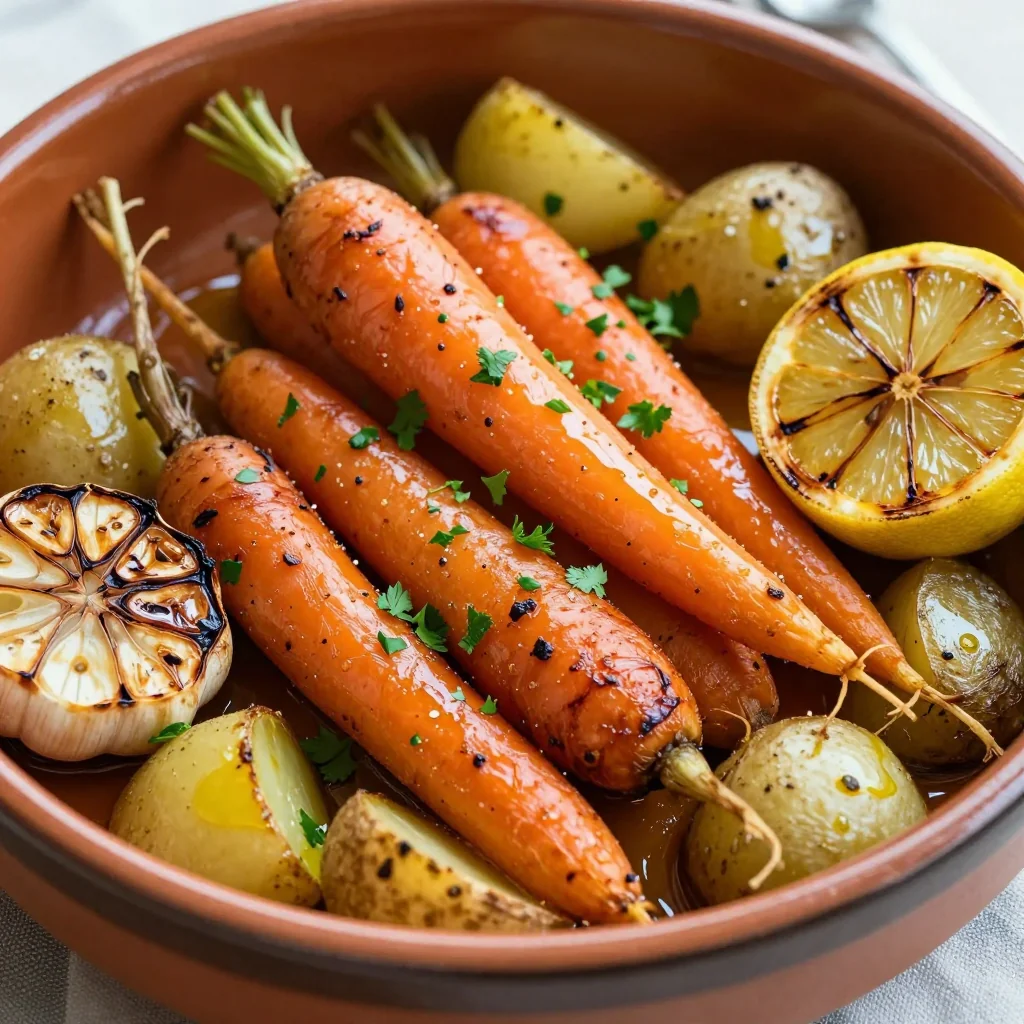
The beauty of this recipe lies in the roots—literally. Carrots bring candy-sweetness, parsnips add earthy perfume, potatoes offer creamy centers, and beets stain everything ruby for plate appeal. Rutabaga or turnip gives a gentle peppery bite that keeps the profile interesting. A whole head of garlic roasts alongside; the cloves slump into buttery pockets you’ll smear on crusty bread. Lemon zest and juice brighten the caramelized edges, while dried thyme (cheap year-round) whispers herbaceous warmth. You’ll need a generous glug of oil—don’t skimp; fat conducts heat and prevents sticking. Salt and pepper seem basic, but they’re the difference between “meh” and “more please.”
Budget Shopping Tips
Buy roots in 3- or 5-lb bags—unit price plummets versus loose. Choose mixed-color carrots for visual pop and antioxidant variety. If beets come with tops, cut them off and sauté separately; greens count as another meal. Lemons are cheapest when bought by the pound, not individually. Olive-oil price got you down? Substitute half with canola; still delicious. Finally, shop the “ugly produce” bin or clearance rack; blemishes disappear under a hot oven.
Step-by-Step Instructions
- 1Heat & Prep PanPosition rack in center of oven; preheat to 300 °F (150 °C). Line the largest rimmed sheet pan you own with parchment or a silicone mat for zero-stick insurance. A dark pan browns faster; if yours is thin, stack two for even heat.
- 2Wash, Peel, ChopScrub or peel vegetables depending on skin toughness. Aim for 1-inch chunks—large enough to prevent drying, small enough for fork-tender middles. Keep beets in a separate bowl until tossing to avoid fuchsia takeover.
- 3Garlic Head HackSlice the top ¼-inch off whole garlic head to expose cloves. Drizzle cut side with oil, wrap loosely in foil, and nestle among vegetables; it will roast into squeezable gold.
- 4Seasoning ShowerTransfer vegetables to a large bowl. Add ¼ cup olive oil, 1½ tsp kosher salt, ½ tsp black pepper, and 1 tsp dried thyme. Zest the lemon over everything (reserve juice). Toss until every piece glistens; oil is the vehicle for flavor adhesion.
- 5Arrange for AirflowSpread veg in a single layer; overcrowding steams instead of roasts. If you’re doubling, use two pans on separate racks and rotate halfway.
- 6Low & Slow RoastSlide pan into oven. Roast 2 hours undisturbed. Low heat converts starches to sugars, yielding silky centers and crisp-chewy edges without burning.
- 7Stir & Boost HeatAfter 2 hours, increase oven to 425 °F (220 °C). Stir veg to expose new surfaces. Roast 15–20 min more until edges blister and caramelize. Watch closely; color develops quickly.
- 8Finish with FreshnessRemove pan. Squeeze roasted garlic cloves over veg, then drizzle 1 Tbsp fresh lemon juice. Toss; acid lifts the richness and adds the “pop” restaurant chefs chase.
- 9Taste & TweakSample a carrot. Need more salt? Add a pinch of flaky sea salt for crunch. Want heat? Dust with red-pepper flakes. Serve hot, warm, or room temp.
Position rack in center of oven; preheat to 300 °F (150 °C). Line the largest rimmed sheet pan you own with parchment or a silicone mat for zero-stick insurance. A dark pan browns faster; if yours is thin, stack two for even heat.
Scrub or peel vegetables depending on skin toughness. Aim for 1-inch chunks—large enough to prevent drying, small enough for fork-tender middles. Keep beets in a separate bowl until tossing to avoid fuchsia takeover.
Slice the top ¼-inch off whole garlic head to expose cloves. Drizzle cut side with oil, wrap loosely in foil, and nestle among vegetables; it will roast into squeezable gold.
Transfer vegetables to a large bowl. Add ¼ cup olive oil, 1½ tsp kosher salt, ½ tsp black pepper, and 1 tsp dried thyme. Zest the lemon over everything (reserve juice). Toss until every piece glistens; oil is the vehicle for flavor adhesion.
Spread veg in a single layer; overcrowding steams instead of roasts. If you’re doubling, use two pans on separate racks and rotate halfway.
Slide pan into oven. Roast 2 hours undisturbed. Low heat converts starches to sugars, yielding silky centers and crisp-chewy edges without burning.
After 2 hours, increase oven to 425 °F (220 °C). Stir veg to expose new surfaces. Roast 15–20 min more until edges blister and caramelize. Watch closely; color develops quickly.
Remove pan. Squeeze roasted garlic cloves over veg, then drizzle 1 Tbsp fresh lemon juice. Toss; acid lifts the richness and adds the “pop” restaurant chefs chase.
Sample a carrot. Need more salt? Add a pinch of flaky sea salt for crunch. Want heat? Dust with red-pepper flakes. Serve hot, warm, or room temp.
Expert Tips & Tricks
- Parcook Dense Stars:Microwave potatoes or rutabaga for 3 min before roasting to shorten overall time and guarantee creamy centers.
- Mix Oil & Butter:Swap 1 Tbsp oil for melted butter in final high-heat phase; milk solids turbo-charge browning (Maillard, baby!).
- Save the Scraps:Peelings and herb stems go into a freezer bag for your next vegetable stock. Pennies add up.
- Don’t Skip Foil on Garlic:Direct heat turns cloves into bitter nubs; gentle steam inside foil yields sweet paste.
- Sheet-Pan Sandwich:Toss in a drained can of chickpeas during the last 30 min for cheap protein that roasts to nutty perfection.
- Balsamic Finish:A 1-teaspoon drizzle of balsamic glaze right before serving amplifies sweetness like magic.
- Reuse Leftover Oil:Strain roasting oil (liquid gold) into a jar; refrigerate and employ for sautéing greens or brushing pizza dough.
Common Mistakes & Troubleshooting
- Mushy Veg:Oven too hot or pan too crowded? Spread thinner or lower temp to 275 °F.
- Burnt Garlic:Wrapped foil packet tore open? Keep seam facing up and double wrap next time.
- Beet Bleed:Pink potatoes look weird? Keep beet chunks separate until final toss or roast on a second pan.
- Bland Result:Salt early and late. Under-seasoned veg = flat veg. Finish with flaky salt for crunch and hits of salinity.
- Sticking Catastrophe:Parchment slid off? Crimp edges under pan rim or weigh with a few potato pieces.
Variations & Substitutions
- Root Swap:Swap parsnips for sweet potato wedges; decrease roast time by 20 min.
- Herb Remix:Use rosemary or oregano instead of thyme; dried Italian blend works in a pinch.
- Citrus Twist:Sub orange or lime zest/juice for lemon; pair with smoked paprika.
- Heat Seeker:Add ½ tsp cayenne or a sliced jalapeño to the oil toss.
- Protein Boost:Nestle Italian sausage links or tofu slabs on top during final high-heat phase.
- Maple Kiss:Stir 1 Tbsp maple syrup into oil for autumn sweetness that caramelizes beautifully.
Storage & Freezing
Cool completely, then refrigerate in airtight containers up to 5 days. For freezer success, spread cooled veg on a tray; freeze 1 hour (prevents clumps), then bag. Keeps 3 months. Reheat at 400 °F for 10 min; microwave works but sacrifices texture. Roasted garlic paste stores separately in a tiny jar covered with olive oil; lasts 2 weeks refrigerated—stir into mayo for instant aioli.
FAQ
Can I roast at 350 °F to save time?
Do I have to peel everything?
What if I don’t have foil?
Is this recipe Whole30 compliant?
Can I prep the night before?
My budget allows only one vegetable—what’s best?
How do I serve this as a main dish?
Any make-ahead party hacks?
There you have it—my decade-old secret to eating like royalty when funds are famine-level. May your oven work its humble magic, your apartment smell like the coziest bistro, and your grocery receipt stay laughably low. Don’t forget tosave the recipebefore you scroll away; future-you (and your wallet) will thank you.
Ingredients
- 2 lbs baby potatoes, halved
- 1 lb carrots, cut diagonally
- 1 large parsnip, sliced
- 1 large red onion, wedged
- 6 cloves garlic, smashed
- Zest & juice of 2 lemons
- 3 tbsp olive oil
- 1 tsp dried thyme
- 1 tsp dried rosemary
- ½ tsp smoked paprika
- Salt & black pepper to taste
- Fresh parsley for garnish
Instructions
- 1Preheat oven to 375 °F (190 °C). Line two rimmed baking sheets with parchment.
- 2In a large bowl combine potatoes, carrots, parsnip, onion, and garlic.
- 3Whisk olive oil, lemon zest, lemon juice, thyme, rosemary, paprika, 1 tsp salt, and ½ tsp pepper; pour over veggies and toss to coat.
- 4Spread vegetables in a single layer, cut-side down for max caramelization.
- 5Roast 60 min, turning once halfway, until golden and fork-tender.
- 6Switch oven to broil; broil 3-5 min for crispy edges.
- 7Transfer to platter, squeeze extra lemon juice on top and sprinkle with parsley. Serve hot or room temperature.
Recipe Notes
- Swap in beets, turnips, or sweet potatoes based on sales.
- Leftovers reheat beautifully in a skillet or tossed with pasta.
- Freeze portions for up to 3 months—great meal-prep base.